
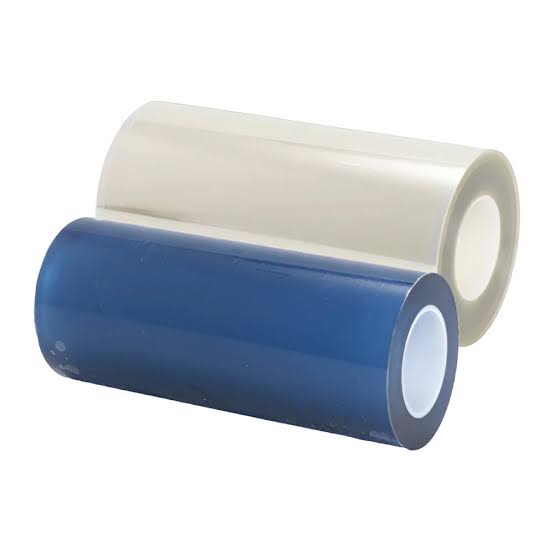
Opening a crystal-label (UV DTF) line is more than buying a printer. The consumables — A film, B film, and UV ink — are what you reorder every month. Getting your first consumables order right determines whether your startup prints clean labels on day one or burns through material on failed transfers.
This guide builds on the UV DTF AB film buyer's guide, which explains the A-film/B-film system. Here we focus on the buying decision: which starter kit configuration matches your shop type, how much UV ink to order with it, and what a sensible first-purchase volume looks like.
View UV DTF AB film product specs
What a crystal-label startup actually consumes
Every UV DTF crystal label uses three consumables in sequence:
- A film (print film) — receives UV ink from the printer
- UV ink — CMYK colours, white underbase, and varnish/gloss topcoat
- B film (transfer film) — laminated onto the printed A film, then carries the label to the target surface
You cannot skip any of them. A film without B film is a printed sheet with nowhere to go. B film without A film is blank carrier. And neither works without UV ink.
This is why a starter kit that pairs A+B film in matched quantities removes a variable from your launch. ChromaBind offers three pre-configured kits; the one you choose depends on your substrate mix and production volume.
ChromaBind A+B starter kits: three configurations
All three kits include compatible A film and B film in one carton. Every kit ships with recorded carton dimensions, gross weight, and HS reference 3920620000.
| Kit | A film | B film | GW | Carton dims | Best for |
|---|---|---|---|---|---|
| A3 paper base kit | 100 sheets A3 white paper base | 50 m B roll (31 cm) | 6 kg | 45.5×33.5×14 cm | Cups, bottles, dark phone cases |
| A3 clear base kit | 100 sheets A3 clear base | 50 m B roll (31 cm) | 5 kg | 45.5×33.5×14 cm | Glass, clear acrylic, light surfaces |
| 31 cm roll kit | 1 roll × 100 m paper base A film | 1 roll × 100 m B film (31 cm) | 12 kg | 34.5×21×33.5 cm | Continuous production, longer runs |
A3 paper base kit
The white paper base A film has an opaque backing that makes CMYK colours pop on dark or coloured substrates. If your customers want crystal labels on black tumblers, navy phone cases, or dark cosmetic packaging, this is your starting kit.
- 100 A3 sheets (31×42 cm each) — enough for 100 small-to-medium label layouts
- 50 m of 31 cm B film — matched to cover approximately 100 A3 sheets in a standard workflow
- 6 kg carton: light enough for affordable courier sample shipping
A3 clear base kit
The clear base A film produces labels with a transparent edge — the label blends into the substrate instead of sitting on a visible white rectangle. Best for glassware, clear acrylic awards, light-coloured electronics, and any surface where a visible white border would look wrong.
- 100 A3 sheets (31×42 cm) double clear base
- 50 m of 31 cm B film
- 5 kg carton: the lightest of the three kits
For a deeper comparison of when to choose white thick base vs double clear base, see our dedicated base-type guide.
31 cm roll kit
The roll-format kit is for shops that already have a UV DTF printer with roll-fed capability and expect continuous production. One roll of paper base A film (100 m) paired with one roll of B film (100 m).
- 31 cm width — the most common format for smaller UV DTF printers
- 1+1 roll configuration in a single carton at 12 kg
- If you graduate from sheets to rolls later, ChromaBind stocks 31 cm, 43 cm, and 61 cm A film rolls and B film in 50 m and 100 m lengths — see the full AB film product page for variant-level carton data
Which kit fits your shop type
Type 1: The trial shop — testing the market
You are buying a UV DTF printer for the first time or adding crystal labels as a new service line. You do not know your monthly volume yet. You need to test on real substrates with real customer jobs before committing to bulk.
Recommended: Start with the A3 paper base kit. Paper base A film handles the widest substrate range (dark and light surfaces). 100 sheets gives you a meaningful test run without overcommitting. If most of your test jobs are on glass or clear items, swap to the A3 clear base kit.
Also order: One carton of UV DTF ink in a colour set (see ink pairing section below). You cannot test film without ink.
Type 2: The substrate specialist — clear surfaces only
Your customer base is primarily awards shops, glassware decorators, or clear acrylic product brands. Every job needs a transparent label edge.
Recommended: The A3 clear base kit. 100 sheets of double clear base A film. Expect lighter carton weight (5 kg vs 6 kg for paper base) — if you air-freight samples, the weight difference matters.
Type 3: The production shop — already printing, adding consumables supplier
You already run a UV DTF printer. You are comparing consumable suppliers for better batch consistency or more complete packing data.
Recommended: The 31 cm roll kit as a test unit. If it performs on your printer, scale to the full roll format: A film in 31/43/61 cm widths and B film in 50 m (5 rolls/ctn) or 100 m (2 rolls/ctn or 1 roll/ctn depending on width).
Important: MOQ and pricing are confirmed per order — the kit carton quantity (e.g., "100 sheets + 50 m B roll") is packing information, not a commercial minimum. Contact ChromaBind with your estimated monthly volume for a confirmed MOQ.
Pairing UV DTF ink with your starter kit
Film without ink is useless. ChromaBind UV DTF ink is available in four pack formats to pair with your starter kit order:
| Ink variant | Pack format | GW | Carton dims | CBM | HS ref |
|---|---|---|---|---|---|
| Vikas series 1L bottles | 20 bottles/ctn | 22 kg | 51×40.8×21 cm | 0.0437 m³ | 3215902000 |
| Vikas series 500 ml bottles | 20 bottles/ctn | 12 kg | 37×30×19.5 cm | 0.0216 m³ | 3215902000 |
| CMYK/white/varnish set | 20 KG/ctn | 22 kg | 47×36×24 cm | 0.0383 m³ | 3215902000 |
| CMYK/white/varnish set | 10 KG/ctn | 12 kg | 37×30×19.5 cm | 0.0216 m³ | 3215902000 |
How much ink to order with one starter kit
A rough rule of thumb: one A3 sheet (31×42 cm, roughly 0.13 m²) uses approximately 8–15 ml of UV ink depending on coverage, white underbase density, and varnish application. 100 sheets consume roughly 0.8–1.5 litres of ink.
If you order one A3 kit (100 sheets), pair it with at minimum the 10 KG CMYK/white/varnish set (12 kg GW, compact carton). This gives you all five colours — CMYK for the image, white for the underbase, and varnish for the gloss topcoat — in one carton.
If you order the 31 cm roll kit (100 m of A film at 31 cm width = approximately 3.1 m² of printable area), the 20 KG set provides a more realistic ink buffer for testing and first production jobs.
Note: Ink consumption varies significantly by design coverage, white underbase settings, RIP software configuration, and printer model. These are general estimates, not guaranteed yield numbers. Test with your actual setup.
Building your first order: a realistic startup shopping list
Minimum viable order (trial phase)
| Item | Qty | Approx GW | Purpose |
|---|---|---|---|
| A3 paper base kit (or clear base) | 1 ctn | 6 kg (or 5 kg) | Test A+B film on your printer and substrates |
| UV DTF ink set 10 KG (CMYK/W/V) | 1 ctn | 12 kg | Test ink colour, white coverage, varnish finish |
| Total | 2 ctns | ~18 kg |
This fits in a single small courier shipment. Run 100 labels across your substrate range, check adhesion on curved surfaces and wash performance (if applicable), and confirm the film feeds cleanly through your printer.
First production order (after successful test)
| Item | Qty | Approx GW | Purpose |
|---|---|---|---|
| A3 paper base A film 500 pcs/ctn | 2–5 ctns | 16.8 kg/ctn | Production stock for paper-base jobs |
| A3 clear base A film 500 pcs/ctn | 1–2 ctns | 11 kg/ctn | Clear-base jobs |
| B film 31 cm × 50 m (5 rolls/ctn) | 2 ctns | 9 kg/ctn | B film reorder — B runs slightly faster than A in sheet workflows |
| UV DTF ink set 20 KG | 2 ctns | 22 kg/ctn | Production ink volume |
At this stage, your freight forwarder can calculate sea freight from the per-carton CBM and gross weight — see our DTF consumables quoting guide for how to use carton data in freight planning.
Common first-order mistakes
Mistake 1: Ordering film without matching ink
A+B kits give you film. They do not include ink. A shop that receives film on Monday and realises it has no UV ink until the following week loses a week of test time. Order ink in the same shipment.
Mistake 2: Underestimating B film consumption
In sheet-fed workflows, A film sheets and B film roll length do not always deplete at the same rate. If you print dense layouts with minimal sheet margins, the B film roll may outlast 100 sheets. If you print sparse layouts with large margins, B film can run out first. For your first order, include at least one extra B film unit (50 m roll) as buffer.
Mistake 3: Assuming A3 sheets will scale to production
100-sheet kits are for testing and sampling. If your test run succeeds and customer orders come in, you will burn through 100 sheets in days. Have your next format already planned — either the 500-sheet or 1000-sheet A3 cartons, or the roll format if your printer supports it.
Mistake 4: Ignoring carton CBM and shipping cost
Two cartons — one A3 kit (45.5×33.5×14 cm, ~0.021 m³) and one 10 KG ink carton (37×30×19.5 cm, ~0.022 m³) — total approximately 0.043 m³. That is a small LCL shipment, but depending on your destination, LCL minimum charges may make air courier cheaper for the trial order. Share carton dimensions and gross weight with your freight forwarder before deciding.
Mistake 5: Not testing on curved surfaces
Crystal labels on flat phone cases behave differently from labels on curved tumblers or tapered bottles. Your test batch should include at least 10–15 labels on curved substrates before you approve the film for production use. If the film lifts at edges on curves, you may need a different A film base or adjusted curing settings.
Sample-first: how to test before committing to bulk
ChromaBind's approach is sample-first, batch-consistent. Here is the recommended workflow:
- Request a starter kit sample. Specify which kit (A3 paper base, A3 clear base, or 31 cm roll) and your printer model. Free sample support is available for qualified buyers — freight terms confirmed by destination.
- Order matching UV ink. The Vikas-series 500 ml bottle carton (12 kg GW) is a practical sample-size ink order if you only need to test colour accuracy.
- Run your standard production workflow. Print, laminate, cut, weed, transfer, cure. Test on your actual substrates — not just flat blanks.
- Check results. Adhesion, colour accuracy, edge sharpness, peel behaviour. If the result meets your standard, you order production volumes with confidence that subsequent batches are produced to the same specification.
Documentation note: SDS/MSDS for UV DTF ink is available on request, to be verified. HS references (3920620000 for film, 3215902000 for ink) are provided for quote purposes — final customs classification is determined by destination-country customs.
How to order
Submit an RFQ with:
- Which starter kit(s) you want (A3 paper base / A3 clear base / 31 cm roll)
- Target substrate types (e.g., stainless steel cups, glass bottles, ABS phone cases)
- Your UV DTF printer model
- Estimated monthly label volume (even a rough range helps)
- Destination port or country
We respond with per-SKU carton data, confirmed availability, and lead time (depends on product, quantity, and production schedule). If you are unsure which kit fits your setup, contact our team — we can recommend based on your printer model and typical substrate.