
The short answer: choose by substrate, not by trend. Stock DTF film, powder and ink if your orders are cotton, blends or dark garments. Stock UV DTF AB film and UV DTF ink if you print hard goods such as mugs, glass and acrylic. Add sublimation film only if your order mix is polyester sportswear and light polyester blanks. Most distributors run DTF as the base lane and add UV DTF or sublimation as a second lane.
Route by substrate: the 30-second rule
Before comparing suppliers, route each order to the method that can actually print it. A clean routing rule keeps you from buying film, powder or ink you cannot resell.
| What you print | Method | Consumables to stock |
|---|---|---|
| Cotton, blends and dark garments (T-shirts, hoodies, workwear) | DTF | DTF transfer film + hot melt powder + DTF ink |
| Hard, smooth goods (mugs, glass, acrylic, metal, tumblers) | UV DTF | UV DTF AB film + UV DTF ink |
| Polyester sportswear and light polyester blanks | Sublimation | Sublimation film |
Sublimation is not a substitute for DTF on cotton. Dye-sublimation ink bonds into polyester fibers, so it will not hold on untreated cotton; for cotton, blends and dark garments, DTF is the versatile option (DTF vs sublimation — dtf.technology).
How the three methods work
DTF (direct-to-film)
DTF prints a design onto PET transfer film, applies hot melt powder to the wet ink, cures it, and heat-presses the finished transfer onto fabric. Because the printed film carries its own adhesive layer, DTF works across cotton, polyester, blends and dark garments. If your buyers sell apparel, this is the lane that keeps film, powder and ink moving together.
UV DTF (crystal labels / AB film)
UV DTF prints onto an A/B film set, then transfers as a peel-and-stick crystal label onto hard, smooth surfaces. The routing is simple: fabric goes to DTF, hard smooth goods go to UV peel-and-stick (DTF vs UV transfers — AMS Transfers). It is a different consumable stack from fabric DTF — you buy AB film and UV DTF ink, not powder.
Sublimation
Sublimation uses heat to turn dye into gas that bonds into polyester or poly-coated surfaces. It is strongest on white and light polyester, which is why it is a sportswear and promotional-blank lane rather than a cotton lane.
What you buy for each lane
Each method maps to a different set of ChromaBind products. This is a stocking map, not a price list — carton, gross weight and CBM are confirmed from the current SKU record when you request a quote.
| Method | ChromaBind product | What to confirm before stocking |
|---|---|---|
| DTF | DTF transfer film | Width (30/33/60 cm), single or double side, hot or cold peel |
| DTF | DTF hot melt powder | Particle size 80–170 microns and grade for your fabric mix |
| DTF | DTF ink | White + CMYK set and printhead compatibility |
| UV DTF | UV DTF AB film | A3 sheets vs 31/43/61 cm rolls, paper vs clear base |
| UV DTF | UV DTF ink | Color set and bottle format for your printer |
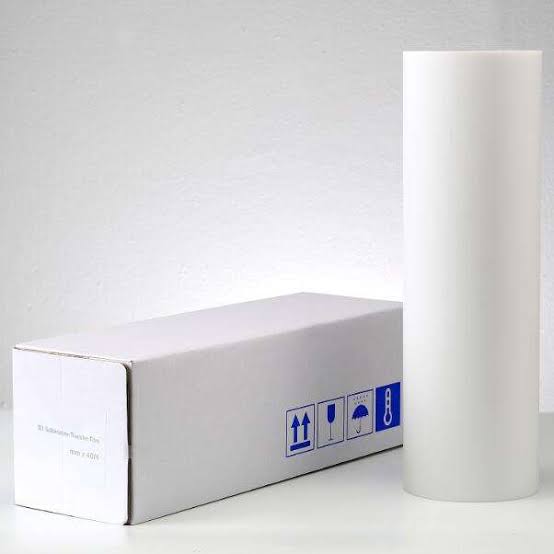
| Sublimation | Sublimation film | 70 gsm, 300 m x 163 cm roll, one roll per carton |
The sublimation film SKU on the current catalog is a 70 gsm, 300 m x 163 cm roll packed one roll per carton at 32 kg gross and 0.059565 CBM — a packing reference read directly from the live SKU, not a family-level estimate. Final HS classification is confirmed with your customs broker.
Which lane actually drives repeat orders
For a distributor or reseller, the value of a lane is not the first carton — it is how the consumables reorder together.
- DTF is the repeat-order core: film, powder and ink are consumed on every job, and white ink is usually the pacing item that triggers the next order. See our ink reorder program guide for the framework.
- UV DTF pairs AB film with UV DTF ink as a growing hard-goods niche — start with the AB film buyer's guide before committing to a stock depth.
- Sublimation is a complementary lane. It only fits polyester orders, so it is best added after you already have an apparel buyer base to cross-sell into.
Check the transfer details before you commit
When you shortlist a supplier for any of the three lanes, confirm the facts that change your landed cost and production:
- The exact SKU and its carton quantity, dimensions, gross weight and CBM.
- A sample-validation route on your actual printer, film or powder combination.
- Documentation status for inks and cleaning solutions — SDS/MSDS and transport appraisal scope is confirmed for the specific SKU and destination in the quotation.
- MOQ and lead time in the formal quote, not read off a packing list.
For film decisions specifically, our hot peel vs cold peel guide and powder particle size guide cover the two most common specification mistakes.
When you are ready to compare specific SKUs across DTF, UV DTF and sublimation, request a quote and tell us your customer's substrate mix. We will confirm the current carton, gross weight, CBM, sample route, MOQ and lead time for the products you are considering.