
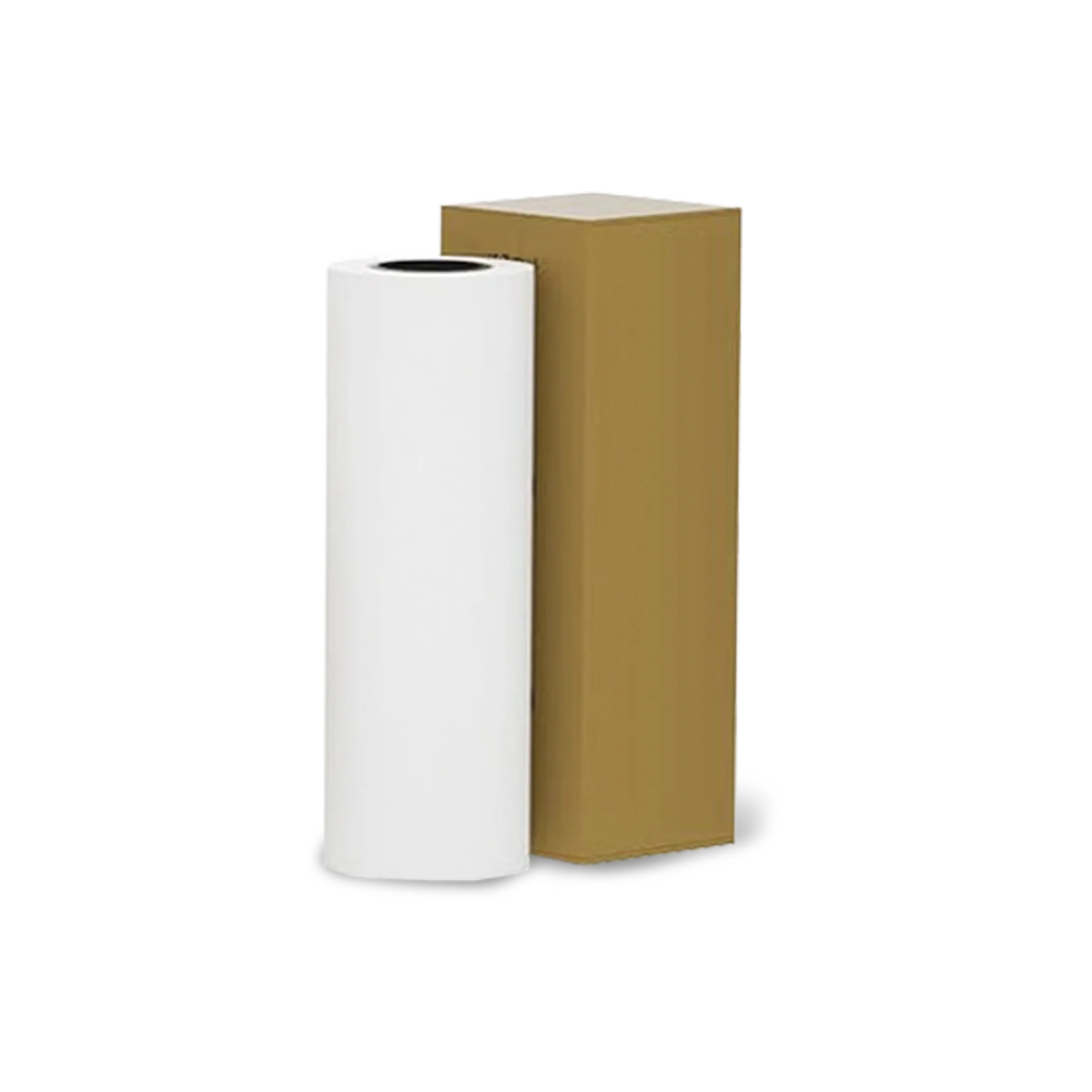
When a Chinese DTF consumables supplier sends you a quote, the price per kilo or per roll is only the start. The real numbers that determine your landed cost are packed into the shipping details: carton quantity, gross weight (GW), cubic meters (CBM), and HS code. If you are an importer, distributor, or production shop comparing suppliers across DTF film, hot melt powder, AB film, and ink, knowing how to read these fields saves you from surprise freight bills and customs delays.
This guide walks through each component of a DTF consumables quote using real SKU data from ChromaBind's catalog. The same principles apply no matter who you buy from.
What is the carton quantity telling you?
The carton quantity line (sometimes labelled "packing" or "units per carton") tells you how many individual items ship inside one export carton. This is not the same as the minimum order quantity (MOQ), though the two are sometimes confused.
Example from a DTF transfer film SKU:
- SKU: CB-FILM-D30 (double-side DTF film, 30cm width)
- Packing: 4 rolls per carton
- Carton: 62 × 31 × 15 cm
- Gross weight: 15 kg
- CBM: 0.02883
- HS code: 3920620000
If you need 200 rolls, that means 50 cartons. You can immediately calculate the total volume (50 × 0.02883 = 1.44 CBM) and total gross weight (50 × 15 = 750 kg). This lets you estimate freight before you place an order.
Another example — DTF hot melt powder in 1kg packs:
- SKU: CB-PWD-1KG-20C (EP005 grade, 80-170 micron)
- Packing: 20 × 1kg packs per 20 KG carton
- Carton: 27 × 53 × 25 cm
- Gross weight: 21 kg
- CBM: 0.035775
- HS code: 3909500000
Notice the gross weight (21 kg) is slightly higher than the net weight (20 kg) — the carton itself and inner packing add about 1 kg. A good quote always separates net and gross weight.
Rule of thumb: If a quote only shows "price per kg" without carton dimensions and gross weight, you cannot estimate freight. Ask the supplier for the full packing data before you commit.
Gross weight vs net weight — why both matter
Net weight (NW) is the weight of the product alone. Gross weight (GW) is the product plus all packaging — carton, inner bags, tape, pallet if applicable.
Freight forwarders charge by gross weight or by volumetric weight (CBM × a conversion factor), whichever is higher. So gross weight directly affects your shipping cost.
| Product | NW per carton | GW per carton | Difference |
|---|---|---|---|
| DTF film (CB-FILM-D30, 4 rolls) | Not listed separately | 15 kg | ~1-2 kg packing |
| DTF powder 1kg packs (CB-PWD-1KG-20C) | 20 kg | 21 kg | ~1 kg packing |
| DTF powder 20KG drum (CB-PWD-20KG-DRUM) | 20 kg | 22.5 kg | ~2.5 kg drum weight |
| DTF ink white (CB-INK-W-20C) | 20 kg | 22 kg | ~2 kg bottle + carton |
When comparing two powder suppliers, do not compare price per kg of product alone — factor in the packing weight. A supplier using heavy drums adds 12.5% to the shipping weight compared to a supplier using bags.
CBM — the number that determines your container
CBM (cubic meters) is the volume one carton occupies. Multiply by the number of cartons to get total shipment volume. This tells you:
- How many cartons fit in a 20GP container (approximately 28 CBM usable)
- Whether you need LCL (less than container load) or FCL (full container load)
- The volumetric weight for air freight
Example: Filling a 20GP with DTF hot melt powder
The ChromaBind 20GP reference for powder in 20KG cartons is 639 cartons, total volume 22.5 CBM. That uses about 80% of the container's internal capacity, leaving room for pallet gaps and stacking.
Example: Mixed container with film + powder + ink
| Product | Cartons | CBM per carton | Total CBM |
|---|---|---|---|
| DTF film double-side 30cm (CB-FILM-D30) | 50 | 0.02883 | 1.44 |
| DTF hot melt powder 20KG (CB-PWD-EP005-20C) | 200 | 0.050085 | 10.02 |
| DTF ink white + CMYK (CB-INK-*) | 100 | 0.040608 | 4.06 |
| Total | 350 | 15.52 CBM |
15.52 CBM fits comfortably in a 20GP container (28 CBM usable), with room for B film or AB film as well. This is how distributors combine multiple consumable lines into one shipment.
HS code — what it does and does not guarantee
Every DTF consumable has a Harmonized System (HS) code used for customs declaration. ChromaBind's catalog references the following codes:
- DTF transfer film: 3920620000 (plastic film, other polyesters)
- DTF hot melt adhesive powder: 3909500000 (polyurethanes)
- DTF ink / UV ink: 3215902000 (printing ink)
- UV DTF AB film: 3920620000
Important: The HS code on a quote is a supplier reference, not a binding customs classification. The final HS code for your shipment depends on your country's tariff schedule, the exact composition of the product, and your customs broker's assessment. Use the supplier's HS code as a starting point for your own import research, especially when checking duty rates and restricted goods lists.
What else should a complete quote include?
Beyond carton data, GW, CBM, and HS code, a professional DTF consumables quote should state:
- Sample policy — ChromaBind supports free samples for qualified buyers. Confirm the target SKU, application, and shipping arrangement (courier account or collect).
- Lead time — depends on the specific product, order quantity, packing requirements (private label, neutral packing), and production schedule. A reliable supplier will not give you a fixed number until your SKU mix and quantity are clear.
- MOQ — the commercial minimum order quantity, which may differ from the carton packing quantity. If the supplier has not confirmed an MOQ for your SKU, ask them to state it explicitly.
- Validity — how many days the quoted price is valid.
- Incoterm — FOB, CIF, EXW, or other terms that define who pays for shipping and insurance.
What not to expect in a DTF consumables quote
Some things are not yet standardized across the industry and require separate confirmation:
- Certifications — REACH, RoHS, CE, FDA, or similar claims should not appear on a quote unless the supplier provides verified certificates. Document status should be stated honestly (e.g., "available on request, to be verified").
- Dangerous goods classification — DTF powder, ink, and cleaning solutions may have shipping restrictions. Do not assume they are non-hazardous without seeing the SDS/MSDS and transport identification report.
- Guaranteed stock — unless the supplier confirms stock on hand, lead time depends on production.
Summary checklist for reading your next quote
When a DTF film, powder, AB film, or ink quote lands on your desk, check these five data points before comparing prices:
- Carton quantity and dimensions — can you calculate the number of cartons and total volume?
- Gross weight per carton — does it include packing weight?
- CBM per carton — multiply by carton count to get total volume
- HS code — is it a reference code you can verify with your customs broker?
- Sample and lead time policy — are they stated or pending confirmation?
A supplier who provides all five fields upfront is saving you weeks of back-and-forth. ChromaBind quotes every SKU with complete carton, gross weight, CBM and HS references so that importers and distributors can estimate freight and plan their container mixes before committing to an order.