
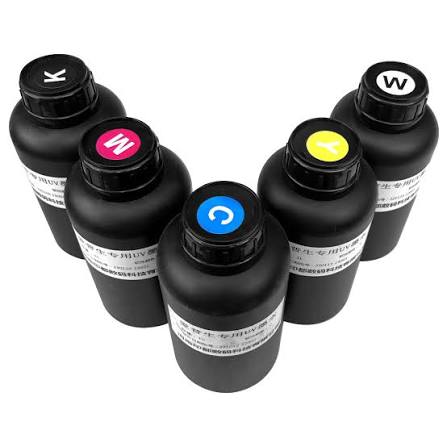
White ink is the part of a DTF workflow that most often separates, settles, and eventually clogs a printhead — and it is also the most preventable problem on the line. The cause is physical rather than a "bad batch": DTF white ink gets its covering power from titanium-dioxide (TiO2) pigment, which is denser than the carrier fluid and heavier than CMYK pigment. Whenever the ink stands still, that pigment sinks. A short daily agitation and cleaning routine keeps it in suspension, and it is what separates a stable production week from a morning of missing nozzles and reprints.
Why white ink settles faster than CMYK
White ink carries far more pigment than cyan, magenta, yellow or black because it has to form an opaque underbase on dark garments. That opacity comes mainly from titanium-dioxide particles, which are heavier than the liquid carrier and slowly settle whenever the fluid path is idle. Brohder's DTF white ink maintenance guide describes this directly: the opacity largely comes from titanium-dioxide particles, which will slowly settle if the fluid path stands still.
CMYK inks are lighter and stay dispersed with less agitation; white ink does not. What this means in practice:
- Overnight, white pigment drops toward the bottom of a bottle, cartridge, damper or ink line.
- The first prints of the day can run thin or grey if you print before re-mixing.
- Sediment that reaches the printhead dries into a partial clog, showing up as missing nozzles or patchy white coverage.
What settled white ink does to a printhead
DTF Database's white ink troubleshooting guide sums up the symptom pattern: white ink clogs, separates, and prints grey. The sequence is usually the same:
- Pigment settles in a static line or damper overnight.
- The first job pulls a pigment-rich or pigment-poor mix through the head.
- Dried pigment builds up on the nozzle plate.
- A partial clog turns into banding, then into a hard clog that needs a flush.
The goal is to interrupt this at steps one and two, before it becomes a cleaning job. If you think the white underbase itself is simply too thin, separate that from a clog problem — see how to evaluate DTF white ink opacity.
Daily and weekly prevention routine
A consistent routine is worth more than an expensive "miracle" ink. Start with the supplier's own handling instructions, then layer on this checklist.
| Frequency | Action | Why it matters |
|---|---|---|
| Before the first job | Shake or agitate white ink bottles and cartridges until pigment is evenly dispersed | Re-suspends TiO2 that settled overnight |
| After any idle of 30+ minutes | Agitate or run the white-channel circulation before printing | Stops settled pigment from reaching the dampers and head |
| End of every day | Run a nozzle check, then cap the head and follow the printer's white-channel shutdown routine | Catches partial clogs before they harden |
| Weekly | Check white ink filters, dampers and tubing for sediment build-up | Settled pigment accumulates in filters first |
Storage and handling that slow sedimentation
How you keep white ink between jobs changes how fast it settles:
- Keep bottles and cartridges sealed and upright; an open bottle absorbs moisture and dries at the cap.
- Store away from direct sunlight and heat, which speed up pigment separation and can change ink viscosity.
- Use stock first-in, first-out and record the batch number on each container.
- Follow the batch label for storage temperature and shelf life; shelf life varies by formula and comes from the supplier, not a general rule.
- Never return unused ink from a damper or line back into a clean bottle; it may already carry particles.
When to stop and clean instead of forcing it
If shaking does not bring the ink back to an even, consistent colour, or if a nozzle check still shows missing nozzles after a normal clean, stop and flush rather than pushing more prints through a partially blocked head. This is where a dedicated DTF/UV printer cleaning solution fits: it is used in the maintenance workflow to clear the white channel and printhead, not as a substitute for daily agitation. See our cleaning solution buyer's guide for what to confirm before ordering.
What to confirm with your white ink supplier
Before committing to a bulk order, confirm the handling details that matter most for clog prevention:
- The supplier's stated storage temperature, shelf life and agitation instructions for the exact batch.
- Whether the white ink is formulated for your printhead system, plus any recommended filters or dampers.
- What documentation (SDS/MSDS and transport appraisal) is available for the ink and any cleaning liquid, so import and handling are sorted before the drums arrive.
For the ChromaBind range, DTF ink is supplied as white plus CMYK in 20KG cartons, and the DTF/UV printer cleaning solution is packed 100 bottles per carton — both with HS reference 3215902000 for quoting. Specifications, compatibility, SDS/MSDS and transport documents are confirmed against the exact SKU and destination in a quotation. Ask for the white ink and cleaning solution details you need.