
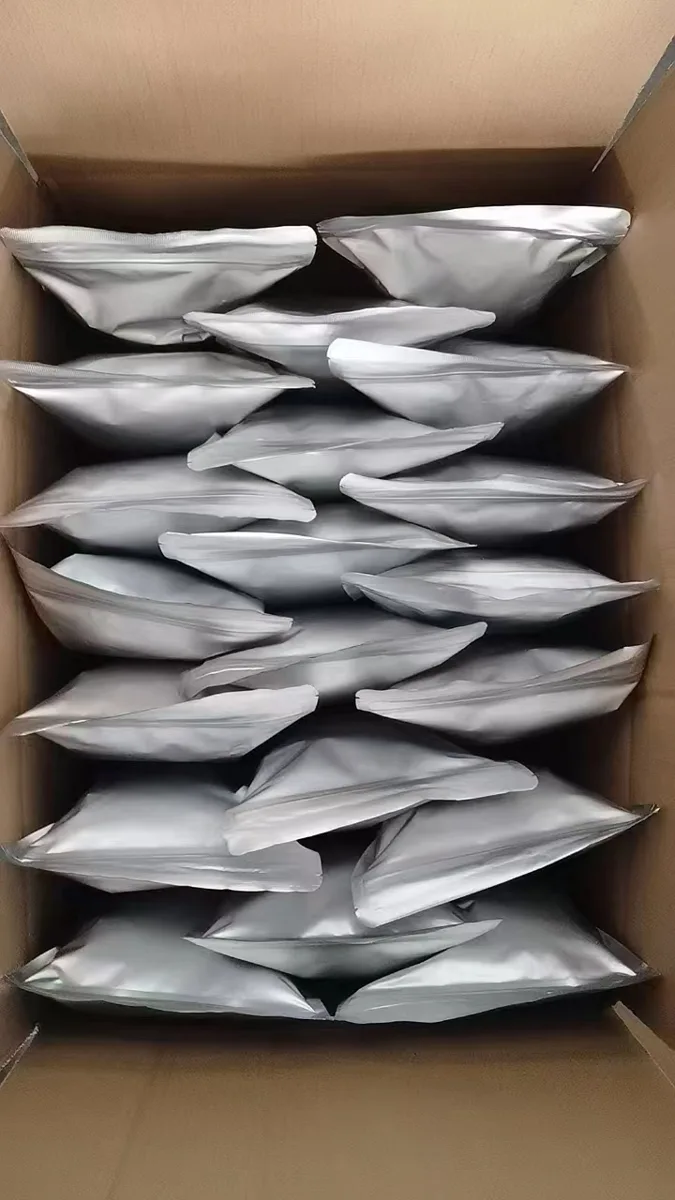
Store DTF hot melt powder sealed, cool and dry — away from direct sunlight, heat sources and humidity. Moisture is the main reason free-flowing powder turns into a caked, clumped block, and a clumped batch shows up later as uneven powder lay, poor adhesion and a rough hand-feel on the transfer. Reseal every bag or drum right after use, rotate stock first-in-first-out, and confirm the exact storage temperature, humidity limit and shelf life for your specific grade from the supplier's TDS or SDS before you stock a large quantity.
Why moisture ruins hot melt powder
DTF hot melt adhesive powder is a hygroscopic material: it absorbs moisture from the air. Once a bag or drum is opened and left exposed in a humid room, the fine particles begin to stick together, then cake into lumps that no longer flow evenly through a shaker or a manual dusting step. Clumped powder produces the two problems production shops notice first: uneven coverage (thin spots that fail to bond) and a rough, sandy hand-feel on the finished garment. This is also the most common reason a "good" powder from one shipment behaves differently from the next — it is usually a storage difference, not a formula difference (see DTFPedia's breakdown of adhesive powder clumping).
Storage conditions that keep powder free-flowing
The exact numbers are set by each grade and supplier, but industry storage guides converge on the same practical envelope. For example, one vendor's storage guide recommends roughly 15–25 °C (59–77 °F) and below 50% relative humidity, inside an airtight, light-proof container (see DTF PrintCo's powder storage and shelf life guide). Treat those as a planning benchmark, not a ChromaBind specification — always confirm the stated window for the grade you are buying.
Temperature
- Keep powder in a cool, stable room; avoid placing bags or drums near heat presses, dryers, ovens, windows or direct sun.
- Large swings between hot days and cool nights condense moisture on the inside of packaging, which is exactly what triggers caking.
- If your stockroom is not climate-controlled, store drums on pallets off the floor and away from exterior walls.
Humidity and sealing
- The single highest-impact habit is resealing: close a 1 kg or 5 kg inner pack immediately after scooping, and never leave an open bag on the bench overnight.
- For bulk drums or 25 kg bags, transfer a working amount into a smaller airtight container and keep the master container closed. A manufacturer's storage guide recommends food-grade HDPE or PP tubs with tight lids and silica gel sachets in humid regions (see Winnerjet's powder container guide).
- A silica gel sachet inside the sealed container is cheap insurance; replace it once it is saturated.
Light and rotation
- Keep packaging out of direct light and away from UV sources, which can age the material over long holding periods.
- Run first-in-first-out (FIFO): mark each received carton or drum with its arrival date and batch number, and consume the oldest stock first.
How shelf life actually works
Hot melt powder does not "expire" like food, but it has a usable window that shortens once a package is opened. As a rough planning figure, one vendor guide states that unopened powder can last roughly 12–18 months under correct storage, with a shorter window after opening (see DTF PrintCo's powder storage and shelf life guide). Do not treat that figure as a promise for the grade you are buying: shelf life depends on the formula, packaging and how consistently conditions are held.
That is why the two numbers to ask for are a stated shelf life and a stated storage range, not a generic "12 months". A supplier that publishes these per grade, and prints a batch number on the pack, gives you a way to trace a bad batch back to its production run instead of guessing.
What to ask your supplier before you stock
| Ask for | Why it matters |
|---|---|
| Storage temperature and humidity range for the exact grade | Confirms the room you need, or whether you need climate control |
| Stated shelf life (unopened and after opening) | Sets your reorder rhythm and FIFO horizon |
| Batch number format and where it is printed | Lets you trace a caking or adhesion complaint to a specific production run |
| TDS with particle size, melting/curing range and storage notes | Gives you the technical baseline for validation |
| SDS/MSDS and transport appraisal status | Needed before you plan import, storage compliance and freight routing |
ChromaBind's DTF hot melt adhesive powder is available in grades such as ep005 80–170u, ep001 80–170u and 1-NO, across several pack formats (see below). Storage range and shelf life for the grade you select are confirmed case by case from the supplier's TDS/SDS as part of the quotation — carton quantity is not a shelf-life figure, and no fixed window should be assumed across grades. You can request a quote with your target grade and pack format here.
Pack formats and what they mean for storage
ChromaBind lists the powder in six pack formats on the live catalog. The right format changes how you store and dispense it.
| Pack format | Typical use | Storage note |
|---|---|---|
| 1 kg pack × 20 (20 kg carton) | Trial runs and small studios | Reseal each 1 kg pack after scooping; easiest to keep fresh |
| 5 kg pack × 4 (20 kg carton) | Mid-volume production shops | Reseal the inner pack between shifts |
| 20 kg carton | Distributors breaking into small packs | Keep the master carton closed; decant a working amount |
| 20 kg drum | Higher-volume shops | Keep the lid sealed; add silica gel in humid regions |
| 25 kg drum | Bulk production | Same — protect from floor moisture and temperature swings |
| 25 kg bag | Bulk import / repacking | Store off the floor, away from walls, resealed or decanted |
Full pack and container references are on the product page: DTF hot melt adhesive powder. If you are planning a mixed import, the pack-format and 20GP container math is covered in our pack formats and container guide.
A simple receiving and rotation routine
- Inspect on receipt. Before accepting stock, look for torn inner packs, loose drum lids, damp cartons or visible lumps.
- Label everything. Write arrival date, grade and batch number on the carton or drum — not only on the inner pack.
- Decant a working amount. Keep the master container closed and feed production from a smaller airtight container.
- Reseal at end of shift. This one habit prevents most caking in humid climates.
- Rotate FIFO. Pull the oldest batch first and record which batch is on the line each day.
For the curing side of the same process, see our guide on DTF powder curing temperature and time. For matching the right grade to fabric, see DTF powder particle size 80–170u.