
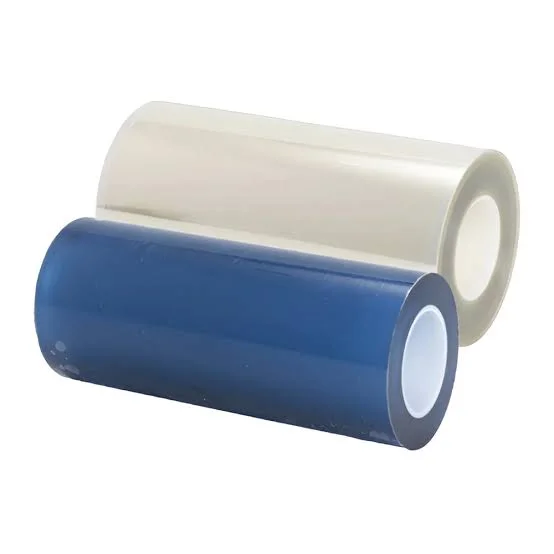
Why the Film-Ink Pair Matters for Hard Goods
UV DTF crystal labels work on surfaces that no other transfer method handles well: glass tumblers, acrylic awards, ceramic mugs, metal bottles, phone cases, wood panels, and hundreds of other rigid substrates.[^1] But getting a durable, clean-looking result depends on more than just picking any AB film and any UV ink. The film base, the ink layering order, and the substrate all interact — and a mismatch shows up as poor adhesion, washed-out color, or transfers that peel after a few days of use.
For B2B buyers stocking consumables — whether you run a crystal-label production shop, sell supplies to print businesses, or import for distribution — understanding these pairings helps you avoid returns and keep customers on reorder.
[^1]: HaiyiDTF, "2026 UV DTF Film Buying Guide," April 2026. https://www.haiyidtf.com/2026-uv-dtf-film-buying-guide/
How UV DTF Film and Ink Work Together
The process runs in four steps:
- A UV DTF printer lays down CMYK + white + varnish ink onto the A film (the print film). The A film has a coated ink-receiving layer that holds the wet UV ink before curing.
- A UV lamp cures the ink directly on the A film surface.
- The B film (transfer film) is laminated over the cured print.
- At application, the B film is peeled away, leaving the decal on the target surface.
Every link in this chain — the A film coating, the ink formulation, the curing step, and the B film adhesive — must work as a system. A film that releases too early or ink that under-cures will produce transfers that look fine until the customer tries to apply them.
What's in a UV DTF Ink Set
A complete UV DTF ink set includes five or six channels:
| Ink channel | Role |
|---|---|
| CMYK | Full-color image reproduction |
| White | Opacity layer behind the color; essential for dark or transparent substrates |
| Varnish / gloss | Protective topcoat and visual depth |
White ink matters more than most new users expect. On a clear-based A film applied to a dark stainless steel tumbler, the white underlayer is the only thing preventing the design from disappearing into the background. On a paper-based A film, the white base of the film itself provides some opacity, but a white ink layer still improves color vibrancy on colored substrates.
Varnish serves two functions: it protects the printed surface from scratching during handling and application, and it gives the finished crystal label its characteristic glossy depth. Some shops run varnish only on premium orders; others make it standard for all drinkware.
Current UV DTF ink pack options include 1 L bottles (20 per carton), 500 ml bottles (20 per carton), and pre-configured CMYK/white/varnish sets in 10 KG and 20 KG cartons. Carton dimensions and gross weight vary by pack format.
How Film Base Affects Ink Behavior
The A film comes in two base types, and they interact with UV ink differently. For a deeper comparison of the two base types — including handling differences, cost trade-offs, and when each makes sense for your shop — see our white thick base vs double clear base guide.
Paper-based A film (white thick base)
The ink-receiving layer sits on a white paper liner. This base naturally provides opacity — the white background reflects light through the cured ink, making colors read as brighter and more saturated without relying solely on the white ink channel.
- Better for: opaque designs on any substrate color, solid logos, text-heavy labels
- Ink behavior: the paper base absorbs a small amount of ink carrier, which can slightly reduce ink pooling but requires consistent curing time
Clear-based A film (double clear / PET base)
The ink-receiving layer sits on a transparent PET liner. There is no built-in opacity — the final look depends entirely on the white ink layer.
- Better for: see-through effects on glass, "floating" logo designs, premium minimal looks
- Ink behavior: ink sits entirely on the coating surface; curing must be complete before lamination or the B film will lift wet ink
The practical rule: if your customer base is primarily drinkware (cups, tumblers, bottles), stock both base types. Paper-based covers most opaque-design orders. Clear-based opens the premium transparent-look tier.
Pairing Quick-Reference Table
This table gives a starting framework for matching film base and ink layers to common hard-goods substrates. Every shop's printer, curing lamp, lamination pressure, and ambient conditions affect results — always test on the actual substrate before ordering production quantities.
| Substrate | Recommended A Film Base | White Underbase | Varnish | Notes |
|---|---|---|---|---|
| Clear glass tumbler | Clear base (double clear) | Full coverage | Recommended | Use white thick base only if design has large solid-color blocks |
| Frosted / dark glass | White thick base | Full coverage | Recommended | Clear base results look washed out on dark glass |
| Ceramic mug (white/light) | White paper base | Light coverage | Optional | Paper base is more cost-effective for opaque ceramic |
| Ceramic mug (dark) | White paper base | Full coverage | Optional | Full white underbase needed to block dark ceramic body |
| Stainless steel bottle | Clear base | Full coverage | Strongly recommended | Test adhesion on brushed vs polished steel; surface prep is critical |
| Acrylic award (clear) | Clear base | Light to none | Optional | Let substrate transparency work with the design |
| Acrylic / plastic (dark) | White thick base | Full coverage | Optional | White base blocks dark plastic from muting colors |
| Wood panel | White paper base | Full coverage | Optional | Wood grain shows through without opaque white base; test on actual finish |
| Phone case (plastic/TPU) | Clear base | Full coverage | Strongly recommended | High-touch; varnish extends life significantly; ink must handle flex |
Common Film-Ink Mismatches That Cause Returns
These are the pairing errors that new crystal-label shops encounter most frequently[^2]:
Clear base A film + no white underbase on dark substrates. The transfer looks fine on the B film carrier, but after application to a dark cup or bottle, the CMYK layer nearly disappears. White underbase is mandatory on any substrate darker than the lightest CMYK tone.
Paper base A film + thick ink deposit on small text. Paper base absorbs ink, which can cause fine text to spread and lose sharpness. If your work involves small fonts or fine line art on hard goods, clear base A film gives crisper edge definition.
Mismatched B film adhesive for the surface energy of the substrate. B film adhesives are pressure-sensitive — they bond by mechanical contact, not heat. Low surface energy plastics (polypropylene, some powder-coated metals) may require surface treatment (flame, corona, or primer) before the B film adhesive bonds reliably. This is a substrate issue, not a film defect, but customers will blame the consumables.
Using the wrong curing parameters for the film-ink combination. UV curing time and intensity must match both the ink formulation and the A film base. Under-cured white ink on clear base A film leads to poor interlayer adhesion between white and CMYK. Over-curing can embrittle the ink film, causing cracks when the transfer is applied to a curved surface like a tumbler.
Varnish-B film adhesive incompatibility. Some varnish formulations create a surface that certain B-film adhesives can't bond to. If transfers peel cleanly off the A film but won't stick to the target surface, suspect a varnish-adhesive mismatch rather than a substrate problem.
Assuming one film-ink pair works everywhere. A pairing that produces perfect results on powder-coated tumblers may fail on raw wood. Every new substrate deserves a small test run.
[^2]: Common failure modes observed across UV DTF user communities and corroborated by PrintingRay's analysis of UV DTF transfer failures (February 2026).
Building a Test Set Before Scaling
The most reliable way to avoid pairing problems is to test systematically:
- Pick one A film type and one ink set as your baseline — for most shops starting with drinkware, A3 paper-based A film + a CMYK/white/varnish ink set is the right starting point.
- Print the same test design on your baseline pair across three target substrates (e.g., a glass tumbler, a stainless cup, and a phone case).
- Check for: clean peel from the A film, complete transfer to the surface, edge adhesion after 24 hours, scratch resistance, and appearance under normal handling.
- Add the second film type (clear-based) only after your baseline is reliable. Test it on the substrates where it's most likely needed: glass and clear acrylic.
- Document what worked — film SKU, ink batch, printer model, lamp settings, substrate, and surface prep. This record becomes your shop's pairing reference and makes reordering consistent.
Questions to Ask Your AB Film and UV Ink Supplier
Before committing to a film-ink pairing for hard-goods production, ask your supplier these questions. The answers tell you whether they understand the application — or are just moving boxes.
- "Has this ink been tested on this specific A film base — paper and clear?" Some UV DTF inks are formulated primarily for paper base and perform differently on clear base. Get a straight answer.
- "What is the recommended white ink deposit weight for hard, non-porous surfaces?" The answer should be a specific number or range (e.g., g/m²), not "whatever looks white enough." This matters for both opacity and interlayer adhesion.
- "Do you have a varnish option, and which substrates benefit most from it?" A supplier who can't explain when varnish helps vs when it's wasted cost doesn't understand the hard-goods use case.
- "What surface preparation do you recommend before applying transfers to glass, metal, and plastic?" The answer should reference cleaning (isopropyl alcohol is standard), surface energy treatment for plastics, and any substrates to avoid.
- "Can you supply A film and UV ink from the same production batch for consistency testing?" Batch-to-batch variation in either film coating or ink viscosity can shift results on hard surfaces. A supplier that aligns batches makes your quality control easier.
At ChromaBind, our UV DTF AB film range covers A3 sheets, rolls from 31 cm to 61 cm, and A+B starter kits across both white paper base and double clear base — and our UV DTF ink sets supply the CMYK, white, and varnish layers in 1 L, 500 ml, and combo carton formats. If you are comparing suppliers for crystal-label consumables, we can support with packing details, sample validation on your target SKU, and consistent batch records for repeat orders. For shops setting up a new crystal-label operation, our A+B starter kit guide covers film, ink, and format decisions for your first order.