
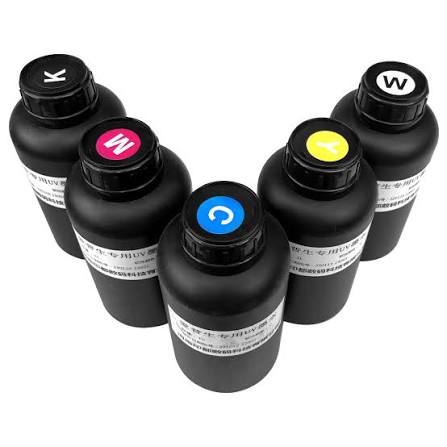
When you import DTF film or hot-melt powder, the shipment behaves like ordinary solid cargo: rolls and bags are packed into cartons, and the main questions are carton count, gross weight and CBM. DTF ink, UV DTF ink and printer cleaning solution are different. They are liquids, so the carrier, the airline or the shipping line, and your destination's customs all ask one extra question first: is this liquid classified as dangerous goods for transport, and does the shipper have the appraisal report to prove it?
This guide explains why liquids need a transport appraisal report, how sea and air routes treat them differently, and which documents to request before your ink or cleaning-liquid shipment leaves the supplier's door.
Why do liquid DTF consumables ship under different rules than film and powder?
Liquids introduce risks that dry consumables do not:
- Leak and spill risk. A damaged bottle or cap can leak inside a carton or container, contaminating other cargo. Unlike solid goods, liquids can "leak, spill, and even pose hazardous risks if handled improperly" (DHL, shipping liquids internationally).
- Flammability and chemical hazard. Whether an ink or cleaning fluid is regulated depends on its formulation — flash point, solvent content and additives — not on the product category name alone.
- Mode-specific regulation. Air freight is governed by the IATA Dangerous Goods Regulations (DGR), while sea freight follows the International Maritime Dangerous Goods (IMDG) Code. The UK government's guidance on moving dangerous goods shows how the international rules differ across air, sea, road and rail. The same liquid can be acceptable under one set of rules and restricted under the other.
This is why "DTF ink" or "cleaning solution" is not enough information to ship. The shipper must classify the exact formulation and produce a transport appraisal report that names the mode of transport.
What is a transport appraisal report?
A transport appraisal report — sometimes called a transport conditions appraisal, dangerous-goods classification report, or goods transport identification report — is issued by a qualified third-party laboratory or appraisal body. It takes a specific product sample and states how it must be handled for a specific mode of transport:
- whether the product is dangerous goods or non-dangerous goods under that mode's rules;
- if it is dangerous goods: the UN number, proper shipping name, hazard class, and packing group;
- the packaging requirements and any limited quantity provisions that apply.
Two points matter most for buyers:
- The report is mode-specific. A report covering sea transport (IMDG) does not automatically clear the product for air (IATA DGR). If you plan to move goods both ways, confirm which mode the report covers.
- The report is formulation-specific. A report for one ink formula is not evidence for a different formula, even from the same supplier.
Sea freight vs air freight: how do the rules differ?
| Factor | Sea freight (IMDG Code) | Air freight (IATA DGR) |
|---|---|---|
| Governing rules | IMDG Code for maritime transport | IATA Dangerous Goods Regulations |
| Typical use for DTF liquids | Bulk imports, full or mixed containers | Small urgent shipments, samples |
| Classification tolerance | Generally more permissive for bulk liquids | Stricter; many liquids restricted or forbidden on passenger aircraft |
| Speed | Slower (weeks) | Faster (days) |
| Cost | Lower per unit for volume | Higher per kilogram |
| Documentation emphasis | DG declaration, marine pollutant check, packing group | UN number, packing instruction, shipper's declaration, cargo-aircraft-only marking when required |
The practical takeaway: for a full container or pallet of ink and cleaning solution, buyers usually ship by sea and confirm the IMDG classification. For small trial quantities or urgent reorders, air may be possible — but only after the supplier confirms the IATA DGR classification and the airline accepts the goods.
What documents should you request for a liquid shipment?
| Document | Why it matters |
|---|---|
| Safety Data Sheet (SDS/MSDS) | Carries the formulation and hazard data that classification and handling rely on |
| Transport appraisal report | States DG vs non-DG classification for the named mode and the exact product |
| UN number / proper shipping name / class / packing group | Required on the declaration and packaging when the liquid is classified as dangerous goods |
| Packing and leakage information | Confirms inner bottles, caps, carton dimensions and leak-proofing for the chosen mode |
| HS code reference | Helps with the import declaration; final classification remains the importer's or broker's responsibility |
You are not expected to be the chemist. You are expected to ask the supplier for the specific, named documents that match your product, your quantity and your route — and to keep them for customs. For the broader import paper trail, see our DTF import documentation guide, and for how the HS reference fits in, read the HS code classification guide.
Pre-shipment checklist
- Confirm the exact product and formulation (ink type, color set, cleaning solution).
- Request the SDS/MSDS and read the transport sections.
- Request the transport appraisal report and check which mode it covers (sea, air, or both).
- If classified as dangerous goods, confirm the UN number, class and packing group.
- Confirm packaging is leak-proof and approved for the chosen mode.
- Confirm the destination country's import rules with your broker.
- Confirm the HS reference, knowing the final code is the importer's responsibility.
If you are comparing suppliers for DTF inks or cleaning solution, ask for the SDS/MSDS and the transport appraisal report for the exact SKU and route you plan to use. Document status for the selected product and shipment is verified and shared with the quotation. Request a quote or view the current product range.