
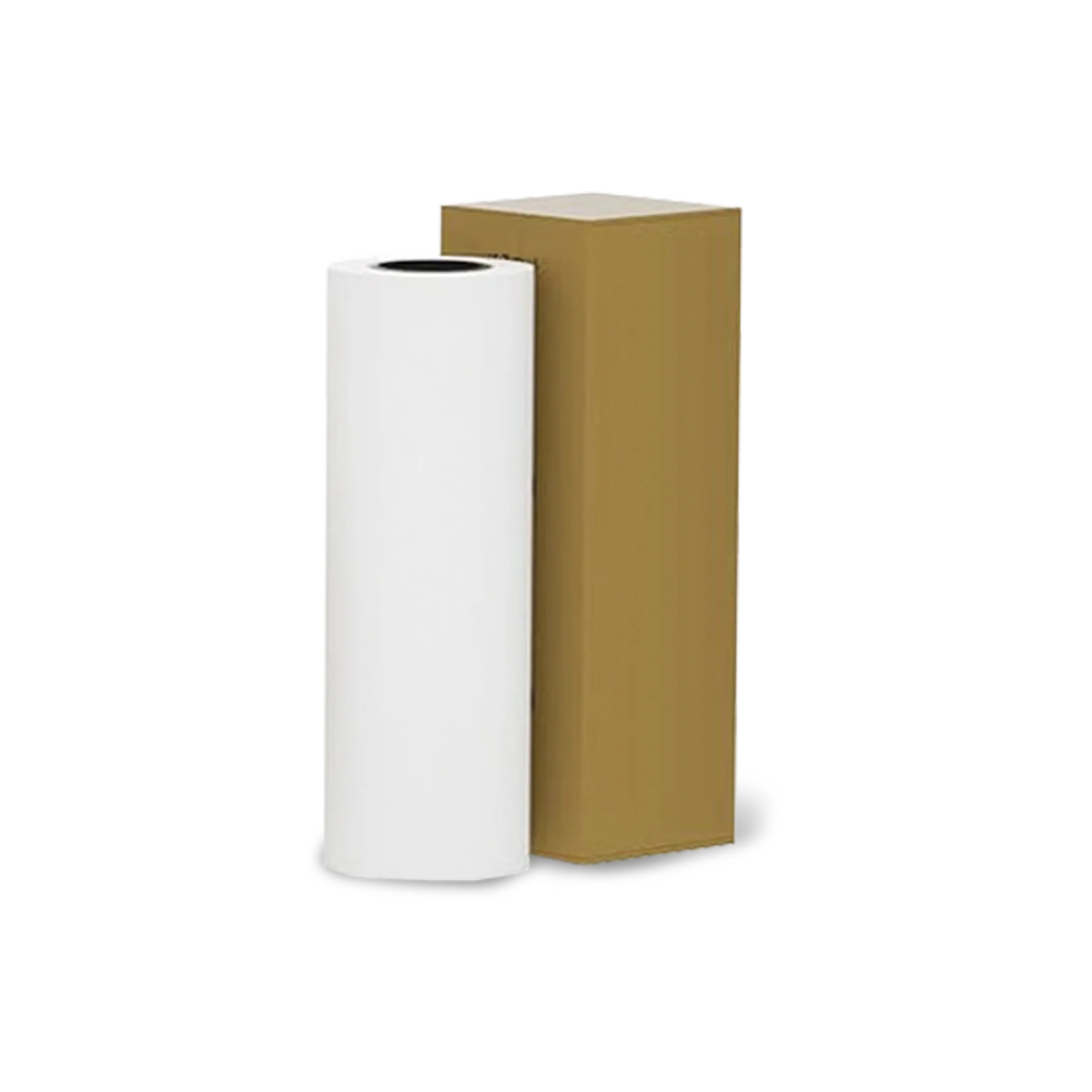
Most DTF film problems don't start at the printer — they start where the rolls are stored. If a roll is kept in a hot, humid, dusty or brightly lit area, the coating can degrade, the edges can curl, and static can pull dust onto the print side. The result shows up later as poor feeding, unpredictable peel or patchy ink release.
For a production shop or importer holding cartons of 30cm, 33cm and 60cm rolls, the rule is simple: keep film cool, dry, dark and horizontal, leave partial rolls wrapped, and use the oldest stock first. The exact shelf life is supplier-specific, so confirm it for your SKU instead of assuming a number.
Why DTF film is storage-sensitive
DTF transfer film is a PET (polyester) base with a coated surface that receives the printed ink and later releases the image. Two properties make storage matter:
- Moisture sensitivity. High humidity can degrade the coating's release behaviour, which is why a dry warehouse is the single most important condition.
- Static and dust. Film builds static easily; a static-charged roll pulls airborne dust onto the coating and onto every print.
- Heat and light. Heat and direct sunlight can affect the coating's stability. PET film suppliers generally specify cool, dark storage — Flex Film's BOPET technical datasheet, for example, recommends storage below 35 °C (95 °F) and away from direct sunlight, bright light sources and high humidity (Flex Film FLEXPET datasheet).
- Mechanical pressure. Stacking rolls flat under weight, or letting them sag on a thin core, can create flat spots, telescoping and damaged edges.
The storage conditions to control
Use this as a warehouse checklist rather than an exact recipe. Confirm the precise temperature and humidity limits on your supplier's datasheet for the exact SKU.
| Condition | Keep it | Why it matters |
|---|---|---|
| Temperature | Cool, below roughly 35 °C, away from heaters and direct sunlight | Heat can soften or destabilise the coating |
| Humidity | Dry, low-humidity storage | Moisture degrades coating release and causes curl |
| Light | Dark or shaded, no direct sun or bright light | UV and heat exposure age the film |
| Orientation | Horizontal, supported across the core | Prevents flat spots, telescoping and edge damage |
| Dust and static | Wrapped, in a clean area | Static-charged film pulls dust onto the print side |
Handling partial rolls between runs
The most damage happens after a roll is opened. A partial roll left loose on a shelf picks up dust, dries at the exposed edges and can curl.
- Reseal the exposed roll in its original bag or film sleeve after each run.
- Return the roll to a horizontal position, not standing on one edge.
- Keep the core supported so the roll doesn't sag in the middle.
- Mark the remaining length and use it before opening a fresh roll (FIFO).
Identifying and protecting the coating side
Printing on the wrong side is one of the most common handling errors, and it wastes a full sheet or panel before the mistake is visible. Before loading, confirm which side is the printable coating.
- Ask your supplier to state the coating side for the exact width and side type you ordered.
- For single-side film, mark or label the coated side on the core or packaging at receiving so every operator sees the same reference.
- For double-side film, confirm whether both sides are printable in your workflow before you change suppliers or batches.
If the coating side isn't clearly documented on the roll you received, stop and ask before loading — don't guess from a used roll.
A short incoming-and-storage checklist
At receiving, and again before each long production run:
- Check cartons for crushed corners, moisture stains or torn film wrapping.
- Confirm the roll width and side type match the SKU (30cm, 33cm or 60cm; single or double side).
- Note the coating-side reference from the supplier.
- Store rolls horizontal, wrapped, in a cool, dry and shaded area.
- Reseal partial rolls and run stock first-in, first-out.
For more on choosing the right film before you store it, see our guide to 30cm, 33cm and 60cm DTF film rolls, and for the matching powder side of the bench, read how to store DTF hot melt powder.
When to flag a roll before printing
Storage problems usually show up as one of these symptoms. If you see them, test a short section before running a full job:
- Edge curl or wavy film — often from humidity or uneven tension.
- Excess static — film clings or attracts dust as soon as it's unrolled.
- Dust or fibre on the surface — visible in the printed white layer.
- Uneven release or feeding — coating may have been affected by heat or age.
None of these is a guarantee the roll is bad, but they are cheap-to-check warning signs that protect a full production run.
Getting the SKU-level storage details
Storage guidance is general; the binding number is the shelf life and storage note on the supplier's datasheet for your exact product. When you request a quote, ask for the storage condition and shelf-life note together with the carton, gross weight and CBM for the roll widths you plan to hold in stock.
ChromaBind supplies single-side and double-side hot & cold peel DTF film in 30cm, 33cm and 60cm rolls, with carton quantity, gross weight and CBM recorded per SKU so you can plan freight and storage before ordering. See the DTF transfer film product page or request a quote with your target width and monthly volume.